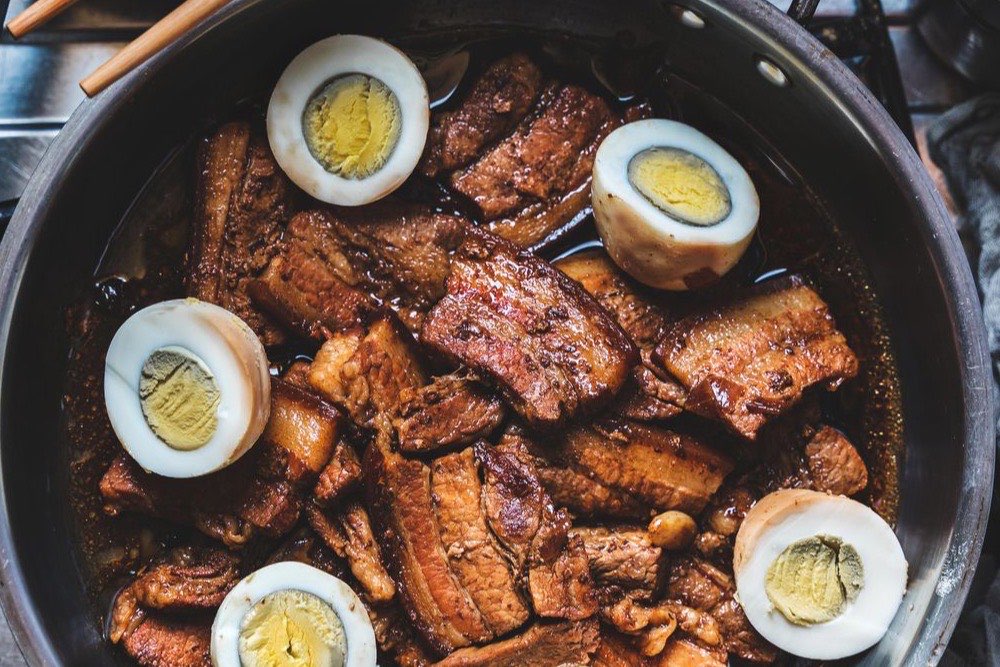
A useful way to choose an adobo recipe is to decide what you want on the plate: a spoonful of sauce for rice, a reduced glaze, or a coconut-based sauce. Those choices affect how much liquid you need and when you stop cooking. This guide is an editorial comparison, not a claim that one household or province has the only authentic version.
Compare the method before buying ingredients
| Style | What changes | Planning question |
|---|---|---|
| Soy-and-vinegar adobo | Soy sauce contributes salt and a darker sauce. | Do you want broth for rice or a reduced coating? |
| Adobo sa puti | A vinegar-forward preparation without soy sauce. | Does the recipe specify salt separately? |
| Adobo sa gata | Coconut milk changes the sauce and richness. | Does the recipe add the coconut milk before or after the meat is tender? |
Merano’s published chicken-adobo guide discusses the soy-and-vinegar base and white and coconut-milk variations. Follow a complete recipe for the style you choose. Simply removing soy sauce or pouring coconut milk into an unrelated recipe changes seasoning and liquid balance.
Start with one controlled batch
- Read the entire recipe and note its meat weight, cut, vinegar type and total liquid. Keep those details together; a ratio without the meat weight is incomplete.
- Choose our chicken adobo guide for a saucy starting point. It includes a refrigerated marinade, cooking steps and a temperature check.
- Cook the meat through before making final sauce adjustments. Remove cooked pieces temporarily if you need to reduce the sauce much further.
- Record one change for your next batch: less soy, more water, or less reduction. Changing all three at once makes it hard to tell which adjustment helped.
Troubleshooting at the end of cooking
| Problem | Useful next step |
|---|---|
| Too salty | Add a little water and taste again. Avoid reducing it back to the same concentration. Serve additional plain rice; sugar does not remove salt. |
| Too sharp for your preference | Check that the meat is cooked, then adjust with small amounts of water. A little optional sugar changes balance, but does not make the dish less acidic. |
| Watery sauce, tender meat | Lift out the cooked meat and reduce the liquid separately. Return the meat briefly rather than continuing to cook it until dry. |
| Dry chicken breast | Use a recipe written for that cut next time. Thighs and breast need different cooking attention; longer simmering is not a universal fix. |
What this comparison does not establish
A name alone does not prove a dish’s age or geographic origin. This guide avoids assigning every variation to a province without a documented source. Vinegar also does not make cooked meat safe to leave at room temperature. Follow the storage guidance in the recipe, and keep a note of the changes you actually made.
Para pumili ng adobo, isipin muna ang nais mong ihain: maraming sarsa para sa kanin, malapot na glaze, o sarsang may gata. Nakaaapekto ito sa dami ng likido at kung kailan ihihinto ang pagluluto. Paghahambing na pang-editoryal ito; hindi nito sinasabing iisa lang ang tunay na adobo ng isang pamilya o lalawigan.
Ihambing ang paraan bago mamili
| Estilo | Ano ang nagbabago | Tanong sa pagpaplano |
|---|---|---|
| Adobong may toyo at suka | Nagbibigay ang toyo ng alat at mas maitim na sarsa. | Gusto mo ba ng maraming sarsa o makapal na balot sa karne? |
| Adobo sa puti | Walang toyo at mas litaw ang suka. | Nakahiwalay ba ang dami ng asin sa recipe? |
| Adobo sa gata | Nagbabago ang lapot at linamnam dahil sa gata. | Kailan inilalagay ang gata ayon sa recipe? |
Tinatalakay sa chicken-adobo guide ni Merano ang bersyong may toyo at suka at ang mga bersyong puti at may gata. Sundin ang buong recipe para sa napiling estilo. Magbabago ang timpla at likido kung basta aalisin ang toyo o magdadagdag ng gata sa ibang recipe.
Magsimula sa isang maingat na batch
- Basahin ang buong recipe. Itala ang timbang at hiwa ng karne, uri ng suka at kabuuang likido. Kulang ang ratio kung walang timbang ng karne.
- Gamitin ang aming gabay sa chicken adobo para sa bersyong may sarsa. Kasama ang pagpapalamig ng marinade at pagsukat ng temperatura.
- Lutuin nang sapat ang karne bago ang huling pagtimpla. Pansamantalang alisin ang lutong karne kung kailangan pang pakuluan ang sarsa para lumapot.
- Isang pagbabago lang ang itala para sa susunod: mas kaunting toyo, dagdag na tubig o mas maikling pagpapalapot. Mas madaling malaman kung alin ang nakatulong.
Pag-aayos ng sarsa
| Problema | Maaaring gawin |
|---|---|
| Masyadong maalat | Magdagdag ng kaunting tubig at tikman muli. Huwag pakuluan pabalik sa parehong konsentrasyon. Hindi inaalis ng asukal ang asin. |
| Masyadong maasim sa panlasa mo | Tiyaking luto na ang karne bago tikman. Unti-unting magdagdag ng tubig. Maaaring baguhin ng kaunting asukal ang balanse pero hindi nito inaalis ang acid. |
| Malabnaw ang sarsa pero malambot na ang karne | Alisin muna ang lutong karne at palaputin ang likido nang hiwalay. Ibalik saglit para hindi matuyo. |
| Tuyo ang dibdib ng manok | Sa susunod, gumamit ng recipe para sa hiwang iyon. Hindi pareho ang kailangang oras ng dibdib at hita. |
Hangganan ng paghahambing
Hindi sapat ang pangalan para patunayan ang edad o pinagmulan ng putahe. Hindi namin itinatakda ang bawat bersyon sa isang lalawigan nang walang dokumentadong sanggunian. Hindi rin ginagawang ligtas ng suka ang pag-iwan ng lutong karne sa mesa. Sundin ang gabay sa pag-iimbak ng recipe at itala ang tunay mong binago.
Sources and further reading
Sources support the factual examples identified above.
Edited by Sam. Editorial approach · Suggest a correction